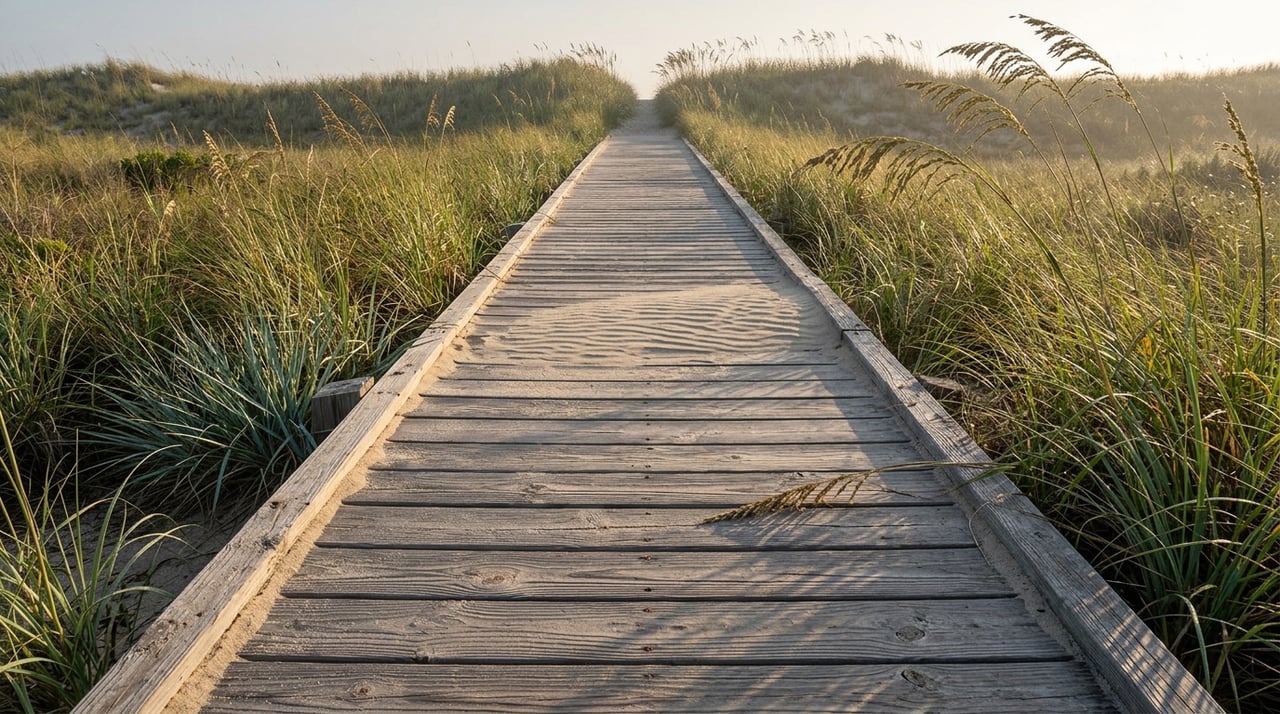
Walk the sand at Islanders Beach Park this month and you will notice the dune line sits farther from the tide than it did two summers ago. Walk a mile up the coast toward Port Royal and the shift is even more dramatic, wide enough that regulars who have used the same access point for a decade are recalibrating where they set up chairs. Walk into Central Island near Coligny Beach or Singleton Beach and the change is real but modest, easy to miss if you are not looking for it.
That difference is not a trick of the light or a matter of which beach you happen to prefer. It is math. The Town of Hilton Head Island's 2025-2026 renourishment project moved roughly 2.2 million cubic yards of sand onto the shoreline, but it did not spread that sand evenly across the island's 46,500 feet of coastline. Some stretches got a heavy dose. Others got a light one. If you live here and have wondered why your neighbor's beach story sounds so much more dramatic than your own daily walk, the answer is sitting in the Town's own project numbers.
What Actually Landed, Reach by Reach
The project broke the island into five separate work zones, each engineered and funded as its own line item. Four of them come with clean cubic-yard and linear-foot figures published by the Town, which means you can do the same division residents have started doing on neighborhood message boards: cubic yards of sand divided by feet of shoreline, which gives you a rough sense of how thick the new beach actually is at each spot.
| Reach | Sand placed | Shoreline length | Sand per foot |
|---|---|---|---|
| The Heel (Port Royal) | 500,000 cubic yards | 5,280 feet | about 95 cubic yards per foot |
| South Beach / South Island (Sea Pines) | 750,000 cubic yards | 10,230 feet | about 73 cubic yards per foot |
| Central Island (Palmetto Dunes, Forest Beach, Coligny, Singleton) | 700,000 cubic yards | 28,860 feet | about 24 cubic yards per foot |
| Fish Haul Creek | 50,000 cubic yards | 2,130 feet | about 23 cubic yards per foot |
Look at that spread. The Heel received about four times as much sand per linear foot as Central Island did. That is not an oversight. Central Island is the longest stretch by far, nearly 29,000 feet, so the same volume of sand gets thinned out over a much greater distance. The Heel and South Beach are shorter, more concentrated reaches, so the same trucks and dredges deliver a visibly thicker beach in a smaller footprint.
Practically, that means if your regular beach is anywhere along the Palmetto Dunes to Coligny corridor, the widening you're seeing this summer is real but proportionally smaller than what residents near Port Royal or Sea Pines are describing. Both are accurate accounts of the same project. They are just describing different math.
Pine Island Got Rock, Not Just Sand
One reach did not get a straightforward sand allocation at all. Pine Island, on the Port Royal Sound side of Hilton Head Plantation, received about 180,000 cubic yards of beach-compatible sand along with six rock breakwaters built between Dolphin Head and Pine Island. That is a structural fix layered on top of a fill job, and it tells you something about how differently the Town treats sound-side erosion compared to open ocean shoreline. Wave energy along Port Royal Sound behaves differently than it does on the Atlantic side, and sand alone tends not to hold as long there. The breakwaters are meant to slow that erosion mechanically, not just refill it.
If you walk or bike through that stretch of Hilton Head Plantation this year, you are looking at the only reach on the island where the Town decided sand by itself would not be enough.
Who Actually Paid for the Sand Under Your Feet
Here is the part that surprises a lot of residents when they first hear it. The $47.5 million project is funded primarily through tourism, specifically the local Beach Preservation Fee layered on accommodations tax collections. In other words, the beach you are walking every morning was largely paid for by the same short-term visitors who fill the rental calendars in July and August, not by a special assessment on homeowners.
Town officials framed it plainly during construction: everyone who uses the beach contributes to the fund that maintains it, but the weight of that contribution falls on the visitor side of the ledger. For residents, that means the wider beach arriving this summer is close to a free upgrade, underwritten by the same tourism economy that can occasionally feel like a hassle during peak season.
This Is a Rhythm, Not a One-Time Event
If this is your first summer on the island, it is easy to treat the renourishment as a singular event. It is not. The Town has run large-scale renourishment projects in 1990, 1997, 2006, and 2016, and this one follows the same 7-to-10-year cadence the Town has maintained for decades. Since the program began, crews have placed roughly 10.7 million cubic yards of sand across the island, and the Atlantic shorefront now sits about 200 feet wider on average than it did before 1990.
That number matters more than it looks. It means the beach you are enjoying this year is not a temporary spike that will wash away and leave the island back where it started. It is the latest layer in a maintenance program that has been quietly, consistently widening the Atlantic shoreline for more than three decades. If you were here for the 2016 project, this summer is your second full cycle. If you weren't, you are seeing the results of a system that was already working before you moved in.
Where the Difference Actually Shows Up This Month
If you want to see the contrast for yourself on a normal weekend walk or bike ride, these are the access points where the reach-by-reach math translates most clearly into what your feet feel:
- Islanders Beach Park and Fish Haul Creek: modest widening, consistent with the lighter per-foot allocation in that reach.
- Coligny Beach and Singleton Beach: part of the long Central Island reach, so the gain is real but spread thin across nearly 29,000 feet.
- Palmetto Dunes and Forest Beach: same Central Island allocation, worth comparing side by side with Port Royal on the same trip if you want to feel the difference directly.
- Port Royal, near The Heel: the most concentrated sand placement on the island this cycle, and the stretch residents describe most often when they say the beach "changed."
- South Beach in Sea Pines: the second-most concentrated reach, with a noticeably wider dry-sand area at low tide.
- Pine Island in Hilton Head Plantation: the only reach with new rock breakwaters in addition to sand, worth a look if you are curious what a structural fix looks like next to a fill-only stretch.
None of this requires a special trip. It is the same beach you already walk, bike, or watch the sunset from. The project just changed how much sand sits between your usual spot and the tide line, and now you know why some of your neighbors are more impressed than others.
If you are thinking about where on the island your own daily routine might land, whether that means a stretch with a wider dry-sand buffer or a quieter reach further from the main renourishment work, Kelly Rosen has walked these beaches long enough to talk through what each part of the island actually feels like day to day, not just what shows up in a listing. Let's Connect if you want a resident's read on any part of Hilton Head Island.